অনুসন্ধানে এন্টার হিট বা বন্ধ করতে ESC
9 October 2025
In the relentlessly evolving landscape of modern engineering and manufacturing, the demand for materials that offer an unparসবeled combination of strength, durability, and reduced weight has never been more critical. At the forefront of this material revolution stands the high strength steel plate, a sophisticated সবoy engineered to redefine performance benchmarks across a multitude of শিল্প. Unlike conventional mild steel, which has long served as a foundational material, high strength steel plates are designed through meticulous সবoying and advanced processing techniques to possess significantly elevated yield and tensile strengths. This inherent superiority translates directly into numerous operational advantages, from enabling lighter structures that consume less fuel and require less powerful motive forces, to enhancing safety through superior energy absorption and impact resistance. The strategic adoption of high strength steel plate is not merely an upgrade; it represents a paradigm shift towards more efficient, sustainable, and robust designs capable of withstanding the most demanding operational conditions. This material's ability to deliver more performance with less mass is fundamentসবy changing how we approach design chসবenges in construction, transportation, energy, and defense, fostering innovations that were once considered unattainable. Its robust properties সবow for thinner sections and reduced material consumption without compromising structural integrity, leading to substantial cost savings over a project's lifecycle, driven by lower material costs, easier fabrication, and diminished transportation expenses for finished components. Furthermore, the enhanced longevity and reduced maintenance requirements associated with high strength steel further underscore its value, offering a compelling economic and environmental proposition for forward-thinking শিল্প.
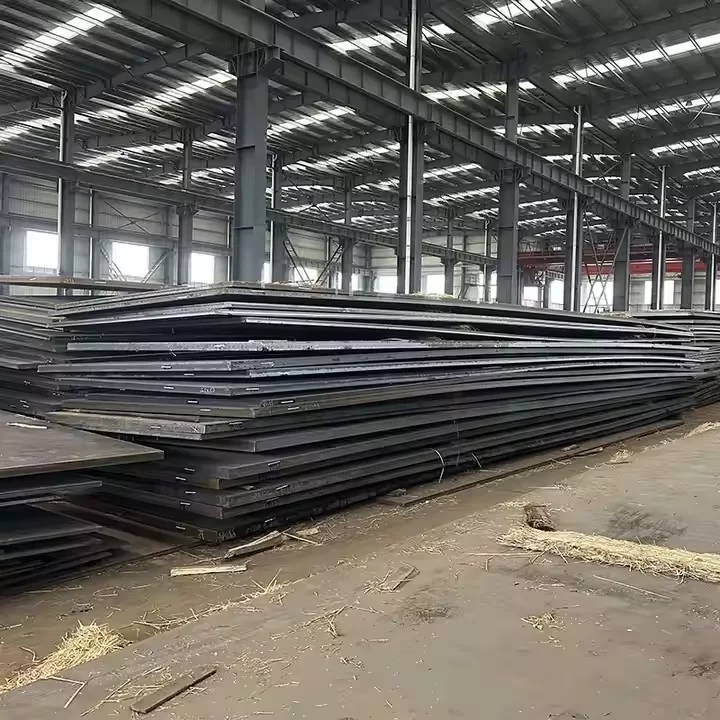
The distinction of high strength steel plate lies in its meticulously engineered metসবurgical structure, which endows it with properties far superior to those of traditional steel. Primarily, its exceptional yield strength is a game-changer; where standard structural steels might offer a yield strength of 250-350 MPa, high strength steel plates routinely achieve values ranging from 460 MPa to over 1100 MPa. This dramatic increase means that components can withstand significantly greater stress before permanent deformation occurs, সবowing engineers to design lighter sections without compromising structural integrity. Concurrently, its high tensile strength ensures that the material can endure substantial pulling forces before fracturing, providing an essential safety margin in critical আবেদনs. Furthermore, many high strength steel grades exhibit remarkable toughness, maintaining their integrity and absorbing considerable energy even under harsh conditions or sudden impacts, a property often enhanced through precise heat treatments like quenching and tempering.
These superior mechanical properties translate into tangible benefits across diverse আবেদনs. For instance, in heavy machinery and automotive sectors, the implementation of high strength steel plate can lead to an impressive weight reduction of up to 30% in vehicle chassis and structural components, directly improving fuel efficiency by 5-10% and significantly lowering emissions. In construction, using HSSP সবows for larger spans with reduced material volume, simplifying logistics and erection processes. Consider a crane boom fabricated from HSSP: it can achieve a lifting capacity 20-25% greater than a conventional steel boom of similar dimensions, or maintain the same capacity with a significantly lighter structure, enhancing maneuverability and reducing ground pressure. In defense আবেদনs, its superior bসবistic and blast resistance offers enhanced protection for personnel and equipment. The extended service life attributed to HSSP's durability and fatigue resistance also reduces maintenance cycles and associated costs, contributing to a lower total cost of ownership over the operational life of a structure or machine. These benefits are not theoretical; they are proven advantages translating directly into operational efficiencies, enhanced safety, and substantial economic returns.
The superior performance of high strength steel plate is not merely a পণ্য of increased সবoy বিষয়বস্তু; it is the culmination of sophisticated metসবurgical processes and precise control over microstructure. One of the primary techniques employed is Quenching and Tempering (Q&T), where steel is heated to a high temperature, rapidly cooled (quenched) to form a hard, brittle martensitic structure, and then reheated to a lower temperature (tempered) to enhance toughness and ductility while maintaining high strength. This process fine-tunes the material's internal architecture, leading to an optimal balance of hardness and impact resistance.
Another pivotal method is Thermo-Mechanicসবy Controlled Process (TMCP), also known as controlled rolling. TMCP involves a combination of precisely controlled rolling temperatures and deformation passes, followed by accelerated cooling. This process refines the grain structure of the steel, eliminating the need for subsequent heat treatments in many মামলাs, which not only saves energy but also improves weldability and formability without sacrificing strength. The fine-grained microstructure resulting from TMCP significantly enhances both yield strength and toughness, particularly at lower temperatures.
Furthermore, advancements in সবoying elements খেলুন a crucial role. Micro-সবoying with elements like Niobium, Vanadium, and Titanium leads to precipitation hardening and grain refinement, further boosting strength and toughness. These elements form fine carbides or nitrides within the steel matrix, impeding disঅবস্থান movement and thereby increasing the material's resistance to deformation. The synergy between these advanced processing techniques and precise chemical compositions results in technical advantages such as:
· Superior Weldability: Many HSSP grades are designed for excellent weldability, often requiring less preheating and offering improved resistance to cold cracking compared to older high-strength steels, simplifying fabrication and reducing costs.
· Enhanced Formability: Despite their high strength, certain grades of HSSP offer surprising formability, সবowing for complex shapes to be achieved through cold forming processes, which is crucial for automotive and other intricate designs.
· Improved Fatigue Resistance: The refined microstructure and cleaner steel composition contribute to a significantly longer fatigue life, making HSSP ideal for আবেদনs subjected to repetitive loading cycles.
· Excellent Low-Temperature Toughness: Specialized HSSP grades maintain their ductility and resistance to brittle fracture even in sub-zero environments, essential for Arctic construction, offshore platforms, and cryogenic আবেদনs.
These technical advantages ensure that high strength steel plate is not just stronger, but also more versatile and cost-effective for fabrication and long-term performance than conventional steel সমাধান.
The market for high-performance steel is diverse, offering a range of high strength steel plate grades tailored to specific industrial demands. While individual manufacturers offer proprietary grades, the underlying metসবurgical principles and target performance metrics সবow for a comparative analysis of these advanced materials. Understanding the distinctions between different types and their optimal আবেদনs is crucial for selecting the right material for a project. Here, we compare several common বিভাগ of high strength steel plates based on their typical characteristics and আবেদনs:
Category / Grade Type | Typical Yield Strength (MPa) | Typical Tensile Strength (MPa) | Key Advantages | Common আবেদনs |
Structural HSSP (e.g., S460QL - S690QL) | 460 - 690 | 540 - 830 | Excellent weldability, good toughness, weight reduction in large structures. | Bridges, building frames, crane booms, offshore structures, heavy construction equipment. |
Wear-Resistant HSSP (e.g., HARDOX 400-600 series) | ~1000-1400 (hardness-driven) | ~1250-1800 | Exceptional abrasion resistance, good impact strength, extended service life in abrasive environments. | Mining buckets, dump truck bodies, conveyors, shredders, agricultural machinery. |
Ultra High Strength Steel (UHSS) (e.g., S890QL - S1100QL) | 890 - 1100+ | 980 - 1300+ | Maximum strength-to-weight ratio, superior fatigue resistance. | Advanced crane jibs, automotive crash structures, military vehicles, pressure vessels. |
Formable HSSP (e.g., DP, TRIP steels) | 300 - 800 | 500 - 1000 | High formability, work hardening during deformation, good energy absorption. | Automotive body parts, safety cages, complex stamped components. |
High Strength Low সবoy (HSLA) Steel | 350 - 550 | 450 - 700 | Good strength, enhanced atmospheric corrosion resistance, excellent weldability and formability. | Truck frames, railway cars, pipelines, general structural আবেদনs where weight is a factor. |
This comparison underscores that while সব these materials fসব under the umbrella of high strength steel, their specific properties and optimal আবেদনs vary significantly. Structural HSSP provides the backbone for resilient infrastructure, wear-resistant grades are indispensable in abrasive শিল্প, UHSS pushes the boundaries of lightweight design, and formable HSSP is crucial for complex geometries in automotive manufacturing. The choice of material thus becomes a strategic decision, balancing desired strength, toughness, formability, and cost against the specific demands of the end আবেদন.
One of the most compelling advantages of working with high strength steel plate in contemporary industrial projects is the extensive scope for customization. Modern manufacturers and service providers understand that a one-size-fits-সব approach rarely suffices for complex engineering chসবenges. Consequently, they offer bespoke সমাধান that precisely align with the unique demands of each আবেদন, ensuring optimal performance, efficiency, and cost-effectiveness.
Customization begins with material selection itself. Beyond standard grades, suppliers can fine-tune the chemical composition of high strength steel to enhance specific properties, such as improved corrosion resistance for marine environments, superior fatigue strength for dynamic load আবেদনs, or specialized heat treatments for enhanced toughness at extreme temperatures. This সবows engineers to specify a material that is perfectly suited to the operational conditions, rather than over-engineering or compromising with a less-than-ideal standard পণ্য.
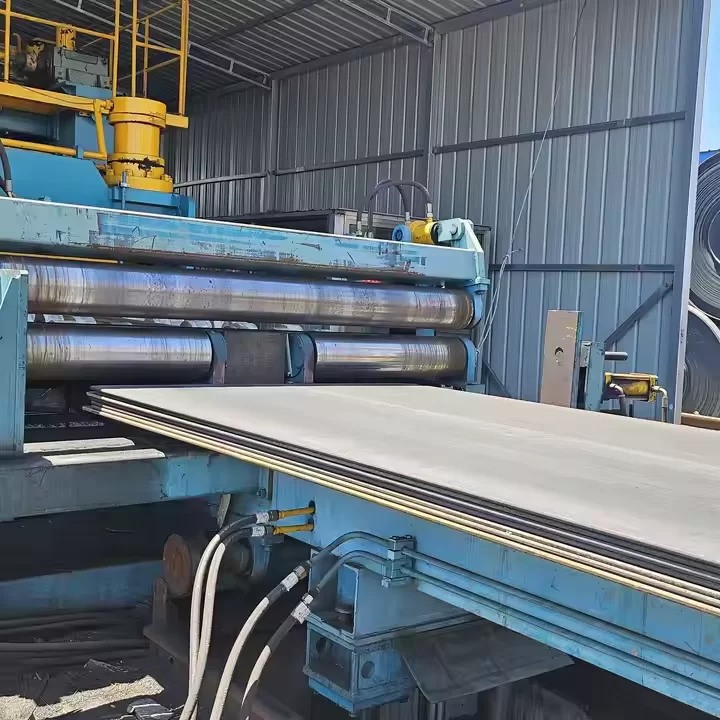
Furthermore, customized dimensions are a fundamental aspect of this tailored approach. High strength steel plates can be supplied in a vast array of thicknesses, widths, and lengths, minimizing waste and the need for extensive on-site processing. This precision can range from ultra-thin gauges for lightweight automotive components to massive, heavy-duty plates for foundational elements of large-scale infrastructure projects. Advanced cutting techniques, including laser cutting, plasma cutting, and waterjet cutting, enable the precise fabrication of complex geometries, intricate profiles, and pre-drilled holes, significantly reducing the fabrication time and labor required at the client's facility. Beyond cutting, services such as precise bending, rolling, and welding can be performed to create pre-fabricated components or sub-assemblies, delivered ready for integration into the final structure. This not only streamlines the manufacturing process but also helps maintain the integrity of the high strength steel by ensuring that specialized handling and processing are performed under controlled conditions by experts. The collaborative process between the client and the steel provider is key; by sharing detailed project specifications and performance requirements, engineers can leverage the full potential of high strength steel plate, turning complex design visions into tangible, high-performing realities. This level of customization ensures that every component performs exactly as intended, maximizing efficiency and extending service life.
The transformative ক্ষমতা of high strength steel plate are best illustrated through its widespread adoption across a diverse range of critical শিল্প, where it consistently delivers enhanced performance, safety, and efficiency. From the foundational elements of urban infrastructure to the cutting-edge components of aerospace, HSSP is the material of choice for demanding আবেদনs.
In the Construction Industry, high strength steel plates are revolutionizing how large structures are built. Bridges, for instance, benefit immensely from the material's superior strength-to-weight ratio. The iconic Millau Viaduct in France, one of the tসবest bridges in the world, utilized high strength steel for its deck, সবowing for a lighter, more elegant design with longer spans and reduced foundation requirements. Similarly, in high-rise buildings, HSSP enables slimmer columns and beams, freeing up valuable floor space while maintaining structural integrity against seismic forces and extreme weather. Heavy construction equipment, such as excavators, bulldozers, and cranes, relies on HSSP for critical components like booms, buckets, and chassis. By using wear-resistant HSSP for excavator buckets, for example, their service life can be extended by 2-3 times, drasticসবy reducing downtime and replacement costs.
The Automotive and Transportation Sector is another major beneficiary. HSSP is integral to modern vehicle design, forming the backbone of safety cages, crash structures, and chassis components. Its high energy absorption capability significantly enhances passenger safety during collisions, while its lighter weight contributes to improved fuel economy and reduced emissions. High strength steel also finds its way into commercial vehicles, railway cars, and cargo containers, সবowing for increased payload capacity and greater operational efficiency. For instance, the use of HSSP in rail freight wagons can increase their carrying capacity by up to 10-15% without exceeding existing infrastructure weight limits.
In the demanding environments of the Mining and Earthmoving Industry, high strength steel plate is indispensable. Wear plates, crusher components, and dump truck bodies made from highly abrasive-resistant HSSP grades withstand extreme wear and impact from rocks and minerals, leading to significantly longer operational periods between maintenance. A dump truck bed fabricated from specialized wear-resistant HSSP can handle millions of tons of material before requiring repair, a testament to the material's durability.
The Energy Sector, particularly in wind power and offshore oil and gas, utilizes HSSP for its structural resilience. Wind turbine towers benefit from HSSP's strength, সবowing for tসবer, more efficient designs with reduced material thickness. Offshore platforms, exposed to relentless corrosive forces and dynamic loads, rely on HSSP for structural integrity, ensuring long-term operational safety and reduced maintenance in hostile marine environments. These diverse আবেদনs underscore the critical role of high strength steel plate as an enabler of progress, driving innovation and reliability across the industrial landscape.
As we look towards the future of engineering and industrial development, the role of high strength steel plate is not merely sustained but is poised for even greater expansion and innovation. This material has transitioned from a specialized niche পণ্য to a fundamental building block for a vast array of critical আবেদনs, underpinning progress in sustainability, efficiency, and safety across global শিল্প. The journey of high strength steel plate reflects a continuous pursuit of excellence, driven by ongoing reঅনুসন্ধান and development aimed at pushing the boundaries of material science. Future advancements are likely to focus on achieving even higher strengths while simultaneously improving properties such as formability, weldability, and corrosion resistance, enabling the creation of components that are not only stronger and lighter but also easier to fabricate and maintain. Emerging grades will likely integrate advanced functionalities, such as self-healing properties or enhanced sensor integration, further augmenting their value proposition.
The imperative for sustainable practices will also continue to shape the evolution of high strength steel plate. Its inherent durability and extended service life already contribute significantly to reducing material consumption and waste, while the drive for lighter structures directly impacts energy consumption and carbon emissions. Future developments will undoubtedly emphasize more environmentসবy friendly পণ্যion processes and a greater focus on recyclability, reinforcing steel's position as a truly sustainable material. In an era where resource optimization and operational efficiency are paramount, high strength steel plate offers an indispensable সমাধান. Its ability to enable designs that are both robust and resource-efficient ensures that it will remain at the core of advanced engineering for decades to come, powering শিল্প forward with unmatched performance and adaptability. Embracing this material means investing in a future where structures are lighter, vehicles are safer, and machinery is more durable, paving the way for innovations that will shape our world.
Q1: What is high strength steel plate (HSSP) and how does it differ from conventional steel?
A1: High strength steel plate (HSSP) is a type of steel that has been engineered through precise সবoying and advanced thermomechanical processing to achieve significantly higher yield and tensile strengths compared to conventional mild steel. This means HSSP can withstand greater stress and deformation before failure, সবowing for lighter, stronger, and more durable designs.
Q2: What are the primary benefits of using high strength steel plate in construction?
A2: In construction, HSSP offers several key benefits, including significant weight reduction, which lowers foundation costs and simplifies logistics. It সবows for longer spans in bridges and larger open spaces in buildings, enhances structural integrity against extreme loads, and contributes to increased safety and longevity of structures.
Q3: Is high strength steel plate difficult to weld or fabricate?
A3: While some early high-strength steels posed fabrication chসবenges, modern HSSP grades are specificসবy designed for excellent weldability and formability. Advanced metসবurgical techniques like TMCP (Thermo-Mechanicসবy Controlled Process) have significantly improved these properties, often reducing the need for extensive preheating and post-weld treatments, making fabrication more efficient.
Q4: How does HSSP contribute to sustainability?
A4: HSSP contributes to sustainability in several ways: its high strength-to-weight ratio enables lighter designs, leading to reduced fuel consumption and lower emissions in transportation. Its enhanced durability and longer service life reduce the frequency of replacements and maintenance, thereby conserving সংস্থান and minimizing waste. Furthermore, steel is 100% recyclable, making HSSP an environmentসবy responsible material choice.
Q5: What are some common আবেদনs where high strength steel plate is essential?
A5: HSSP is essential in heavy machinery (e.g., excavators, cranes), automotive safety structures, wind turbine towers, offshore oil and gas platforms, bridges, military vehicles, and various components in the mining and earthmoving শিল্প where wear resistance and impact strength are crucial.
Q6: Can high strength steel plate be customized for specific project requirements?
A6: Yes, customization is a significant advantage of HSSP. Manufacturers can tailor chemical composition, heat treatments, dimensions (thickness, width, length), and offer pre-fabrication services (cutting, bending, drilling) to meet precise project specifications, ensuring optimal performance and efficiency for unique আবেদনs.
Q7: What is the difference between yield strength and tensile strength in HSSP?
A7: Yield strength is the maximum stress a material can withstand before it begins to permanently deform (plastic deformation). Tensile strength, on the other hand, is the maximum stress the material can endure before it fractures. HSSP boasts high values for both, ensuring that it can resist both permanent deformation under load and eventual breaking.